Discover direct and indirect subsidiaries of a company. Look beyond familiar brands, narrow the group to your market and identify operating businesses worth an account-owner review.
Parent companyIntermediate ownerOperating business
Meridian Group / SubsidiariesSubsidiaries by entity typeExample data · Fictional companies
3 example records
01
GB · Direct subsidiary
Meridian UK
Operating company
Customer to confirm
02
NL · Intermediate owner
Meridian Holdings
Holding company
Relationship context
03
DE · Indirect subsidiary
Meridian Manufacturing
Operating company
Candidate to review
A different name can hide a relevant subsidiary.
START FROM THE RIGHT PARENT
Account context
A different company name can hide a relevant subsidiary.
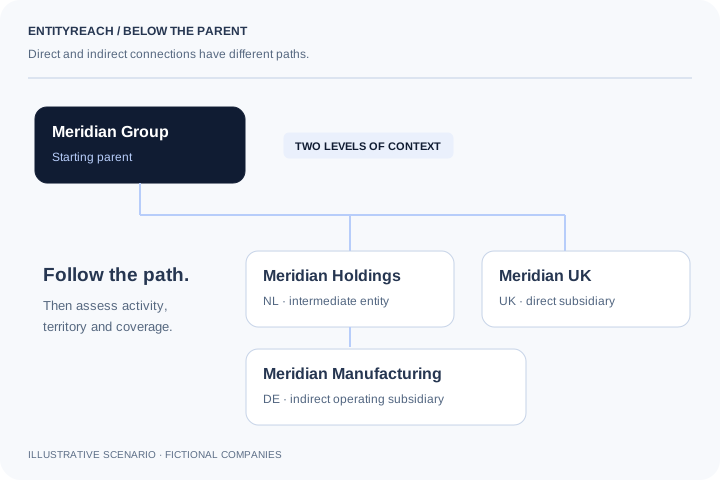
An indirect subsidiary may sit beneath an intermediate holding company and use a brand that looks unrelated to your customer. Trace the legal relationship first, then assess what the operating business does. Keep holding entities as context unless you have a reason to investigate their buying role.
Six names are a starting point. Two deserve the next review.
Returned entities6
Operating businesses4
In territory3
To investigate2
Illustrative screening funnel: six returned entities, four operating businesses, three in territory and two requiring further review. These are example counts, not product benchmarks.
From parent to a reviewed subsidiary.
01
Identify the parent
Use the exact legal company and country. A group brand or website is a starting clue, not a unique entity identifier.
02
Follow the branches
Inspect direct and indirect relationships. Review overseas companies and intermediate entities where returned.
03
Qualify the candidate
Check operating activity, territory, existing coverage and the question your account owner can answer next.
Read the entity type before treating it as an account.
Find subsidiaries: research evidence and account planning decisions
Record you encounter
What it tells you
What to establish next
Direct subsidiary
An immediate relationship below the selected parent.
Whether your existing agreement already covers it.
Indirect subsidiary
A relationship through one or more intermediate entities.
The full path and whether the operating activity fits your offer.
Holding company
An entity whose function may centre on ownership.
Whether it has an operating or purchasing role relevant to you.
Unresolved profile
A relationship record without an available detailed profile.
Identity using the returned name, country and registration information.
Discover operating businesses behind the names.
01
Start from the right legal company.
A familiar brand name may cover several legal entities. Confirm the company’s country and registration number before exploring its group. If you have a website, use it to find possible matches; it does not replace the legal-entity check.
02
Follow the structure beyond the first level.
An operating business can sit several levels below the ultimate parent. Expand the group tree to see intermediate companies, or use the table to work through the available entities without opening every branch.
Trace direct and indirect connections
Filter by the countries you serve
Review operating activity before shortlisting
Keep holding companies separate in your review
03
Find a route into the next conversation.
Once you identify a relevant subsidiary, record why it matters and ask your existing customer whether an introduction makes sense. Shared ownership does not establish a separate budget, common procurement process or an unmet product need.
Use cases
From discovery to a relevant shortlist.
Overseas expansion
Follow the customer into markets you serve.
A UK customer may have related operations elsewhere in Europe. Filter the returned group by your markets and investigate each candidate’s activity.
Next actionConfirm local operating needs and whether the company buys under a group agreement.
Identify the parent company, confirm its country and registration details, then inspect the available group structure. Review direct and indirect relationships and filter the returned entities to the markets you serve.
What is a subsidiary company?
A subsidiary is a separate company controlled by another company. For account planning, that separate legal identity matters: the subsidiary may have its own operations and purchasing arrangements, which must be checked rather than assumed.
What is the difference between direct and indirect subsidiaries?
A direct subsidiary sits immediately beneath its parent in the returned relationship path. An indirect subsidiary is connected through one or more intermediate companies. Both may be relevant to your review, but you should retain the full connection.
Can I find international subsidiaries?
The returned group can include companies in other countries where relationships are available. Cross-border coverage varies, so test countries you know the group operates in before treating the result as comprehensive.
Can a subsidiary have a different name from its parent?
Yes. Related legal entities may use different brands, trading names or websites. A verified relationship path is more useful than name similarity when deciding whether the company belongs to the customer’s group.
Is a branch the same as a subsidiary?
A branch is generally an establishment of an existing legal entity, while a subsidiary is a separate company. Confirm the record type and legal identity before treating a branch as a separate account expansion candidate.
How do I identify subsidiaries worth approaching?
Review territory, business activity, likely product fit and existing agreement coverage. Then ask the account owner to confirm a practical next step. EntityReach supports the research and notes; it does not establish need or buying intent.
Why does a subsidiary appear without a full company profile?
A relationship record may include a legal name or registration number without a resolvable provider profile ID. The entity remains visible, but detailed company and contact lookup may not be available for it.
Does a subsidiary always buy independently?
No. Purchasing may be local, centralised or covered by an existing group agreement. Use the subsidiary connection to frame the question, then confirm responsibility and coverage with your account team.
Can I save and export a subsidiary shortlist?
You can export the current filtered company view and, when signed in, save company plans and review labels with the group. Document exclusions and unresolved identity questions so the list remains useful at the next account review.
Explore your customer’s wider group.
Start with a company you serve. Find where your offer could fit next.
 View full-size diagram